
Description
Wedding Retablo – Two Grooms Keepsake from Peru
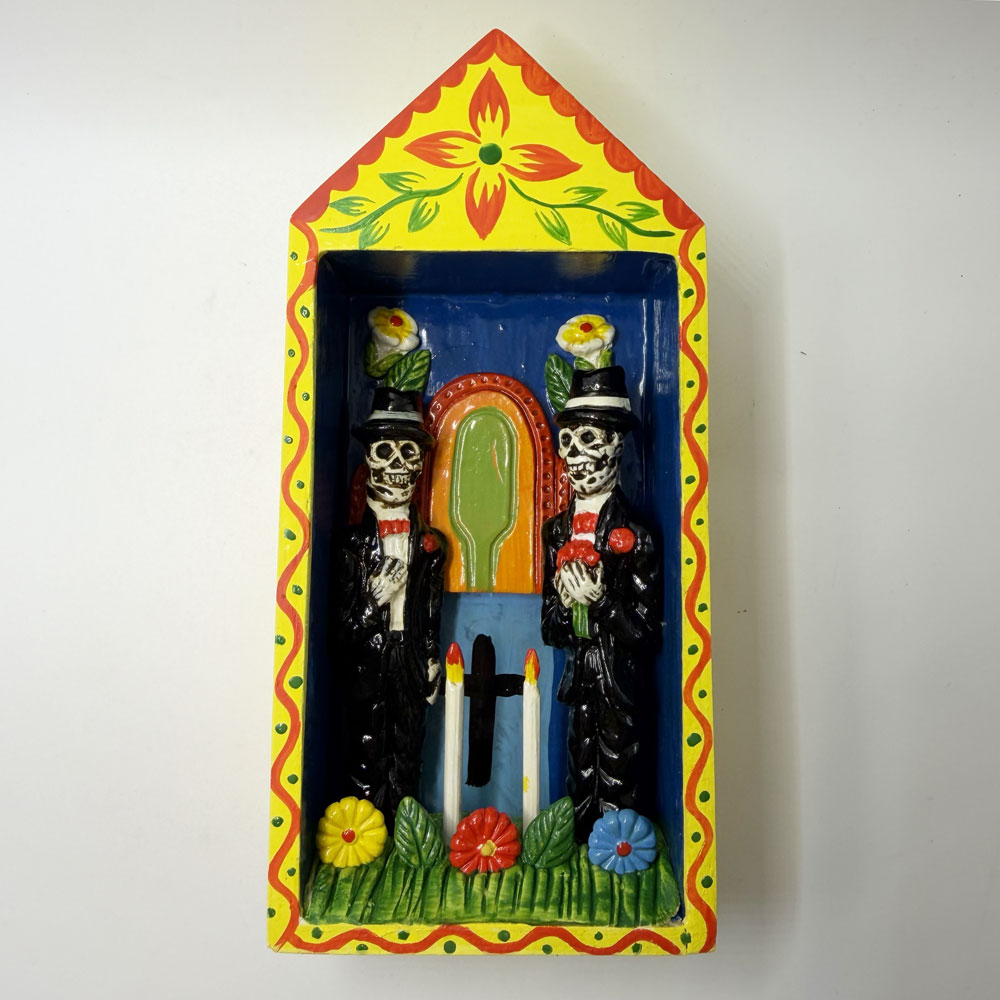
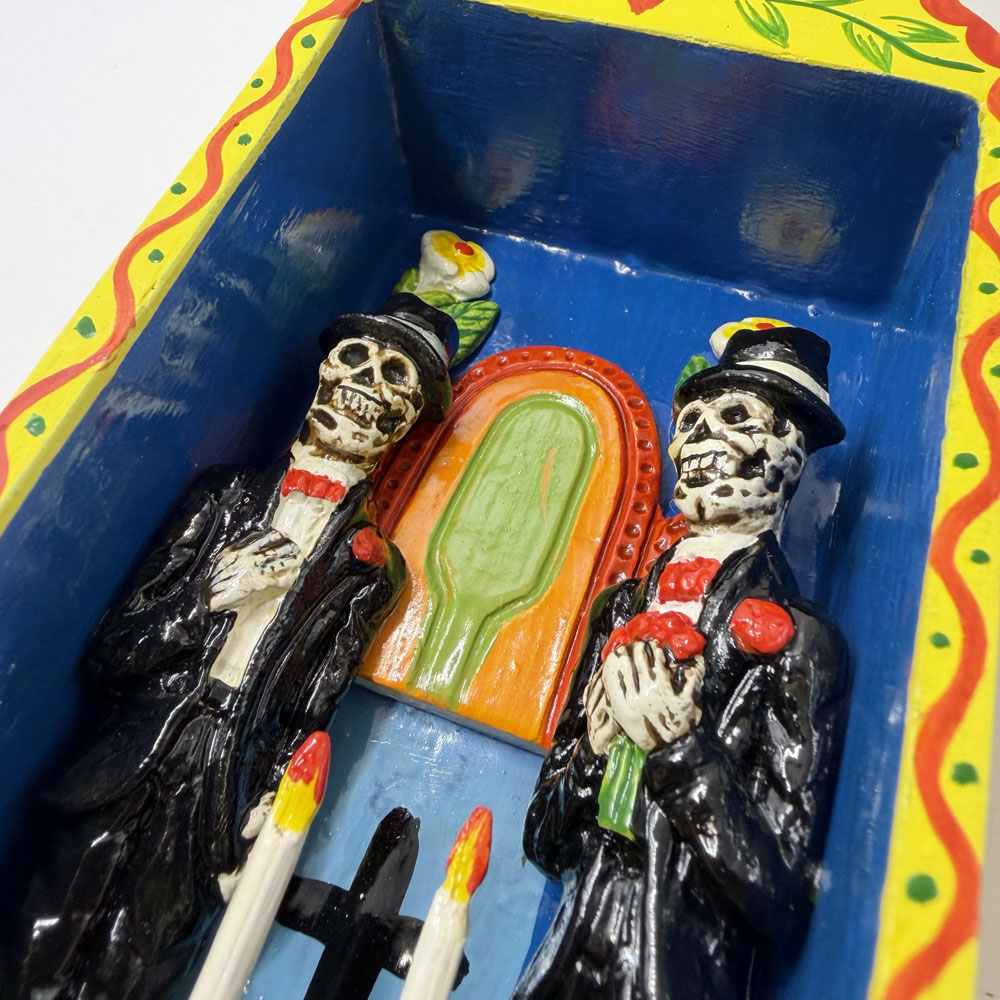
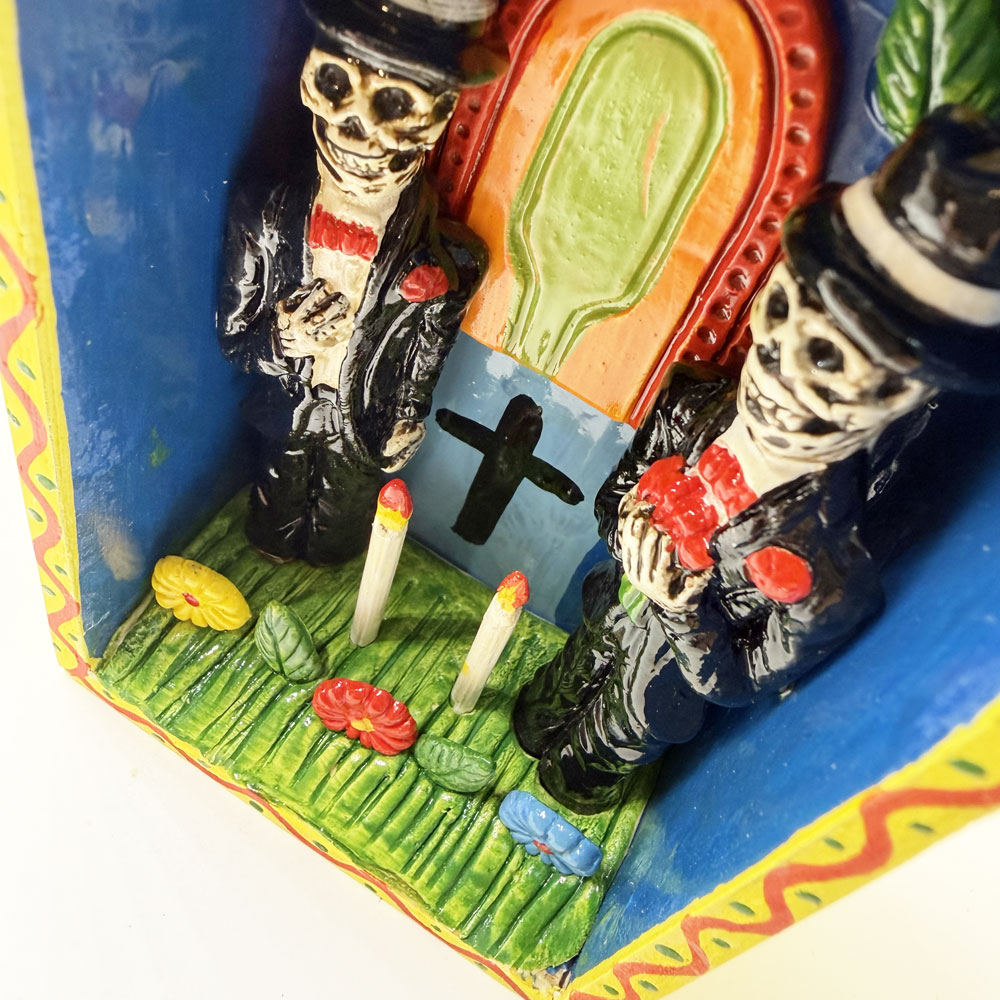
The Wedding Retablo – Two Grooms presents a joyful union through the vibrant language of Peruvian folk art, depicting two skeletal grooms standing together beneath floral motifs and candlelight. Though playful in form, the imagery carries layered cultural meaning, rooted in Andean traditions where skeleton figures symbolise continuity, remembrance, and love that extends beyond physical life.
Retablos originate in the Andean regions of Peru, particularly within the centuries-old Ayacucho folk-art tradition. Originally created as portable altarpieces, these small wooden shrines were designed to house saints, protective figures, and sacred scenes behind hinged doors. Over time, retablos evolved into richly detailed narrative boxes portraying everyday life, celebrations, social rituals, and moments of devotion. Contemporary retablos often reflect both ancestral symbolism and modern relationships, allowing the tradition to remain living rather than fixed in the past.
Skeleton couples, often known as Novios, are widely associated with Día de los Muertos and other ancestral remembrance practices across Latin America. Rather than focusing on loss, these figures represent enduring bonds, fidelity, and the belief that love continues across worlds. In this retablo, the two grooms stand as equals, expressing commitment, unity, and shared devotion. Their presence honours both romantic partnership and the wider spiritual understanding of love as something that transcends time, form, and mortality.
This piece is handcrafted by Fair Trade artisans in Peru using traditional methods. The figures are formed from a dough made with potato starch and mineral powders, then carefully hand-painted in vivid colours. Each retablo carries subtle variations, reflecting the individuality of the artisan and the handmade nature of the work.
The Wedding Retablo – Two Grooms may be placed on an altar to honour love, partnership, and ancestral connection. It is especially meaningful during weddings, anniversaries, Pride celebrations, or remembrance rituals. It may also serve as a devotional object acknowledging love as a sacred and enduring force, held in relationship with both the living and the ancestors.
Both decorative and symbolic, this retablo offers a celebration of unity, protection, memory, and love’s lasting presence.


