
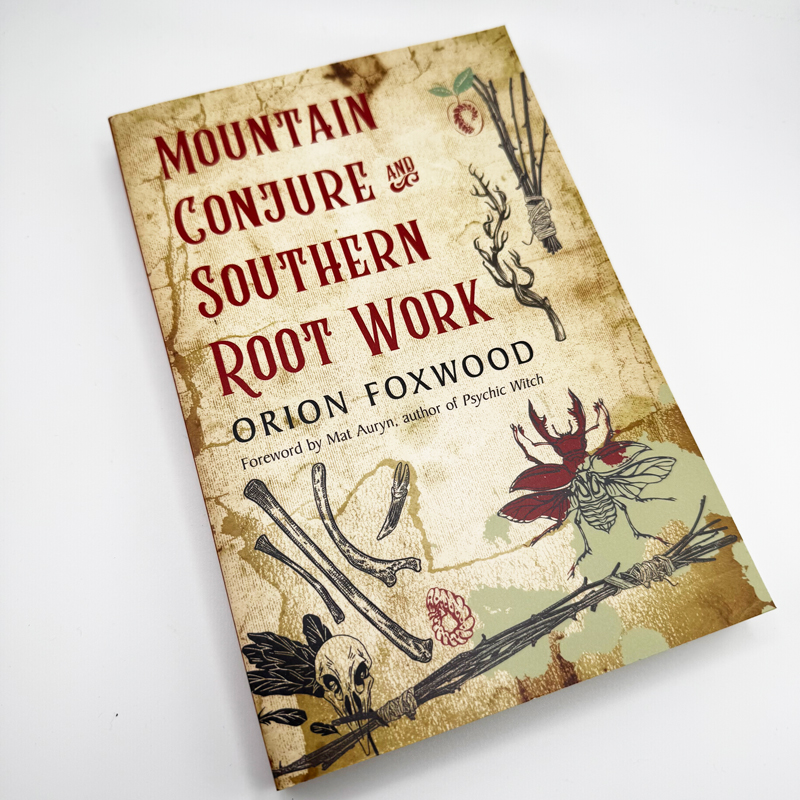
Description
Mountain Conjure and Southern Root Work by Orion Foxwood is a study of Appalachian folk magic and traditional Southern root work, shaped by oral tradition, regional culture, and lived spiritual practice. Drawing from his upbringing in rural Appalachia, Foxwood presents an approach to conjure that is rooted in relationship, land, timing, and inherited knowledge rather than abstraction or performance.
The book explores forms of folk practice historically found throughout parts of the American South and Appalachian regions, where spiritual work often developed through a blending of influences including European folk customs, regional herbal knowledge, Christian prayer traditions, and practical everyday ritual. Rather than presenting these traditions as fixed systems, Foxwood approaches them as living practices shaped by place, community, and personal experience.
Throughout the text, readers are introduced to concepts and methods connected to Southern folk magic and conjure, including:
- Working by the signs
- Faith healing traditions
- Candle work and “settling the light”
- Root work and the ritual use of herbs, stones, and natural materials
- Blessing and cleansing practices
- Prophetic dreaming and spiritual signs
- Protective and baneful workings
Foxwood frames these practices within the broader rhythm of Appalachian life, discussing how seasonal cycles, land, farming traditions, and spiritual belief informed everyday approaches to magic and ritual. This grounding in place gives the book a strong sense of regional identity, distinguishing it from more generic presentations of folk magic.
A recurring theme throughout Mountain Conjure and Southern Root Work is the importance of relationship, both with spirit and with the surrounding environment. Rather than positioning spiritual work as a purely individual act of will, the book emphasises listening, observation, and participation within existing patterns and traditions.
The text also reflects the oral nature of many folk practices. Stories, sayings, signs, and inherited teachings appear throughout the book, reinforcing the way knowledge has historically been passed between generations within communities. This creates a tone that feels reflective and experiential, rather than instructional in a strictly modern sense.
While the book includes practical material, its focus remains contextual as much as procedural. Readers interested in traditional folk magic, Appalachian spirituality, or regional conjure practices will likely find value not only in the methods discussed but in the worldview surrounding them.
Orion Foxwood is known for his work within traditional craft and folk magic communities and has lectured throughout the United States and the United Kingdom on subjects including Southern conjure, Faery Seership traditions, and ritual practice. His background includes work within Celtic and Romano-Celtic traditional craft as well as the Alexandrian tradition. These influences inform the wider perspective brought into the book, while the central focus remains Appalachian conjure and Southern root work.
The inclusion of a foreword by Mat Auryn places the work within a broader contemporary conversation surrounding traditional witchcraft and folk spirituality, while still maintaining its distinct regional identity.
Mountain Conjure and Southern Root Work is suited to readers interested in folk magic, oral traditions, regional spiritual systems, and the relationship between land, culture, and ritual practice. It may particularly appeal to those seeking a deeper understanding of Appalachian conjure beyond simplified or aesthetic interpretations often found online.
Rather than presenting spiritual practice as separate from daily life, the book reflects traditions in which ritual, belief, labour, healing, and storytelling existed closely together, shaped by both necessity and inherited understanding.


