Description
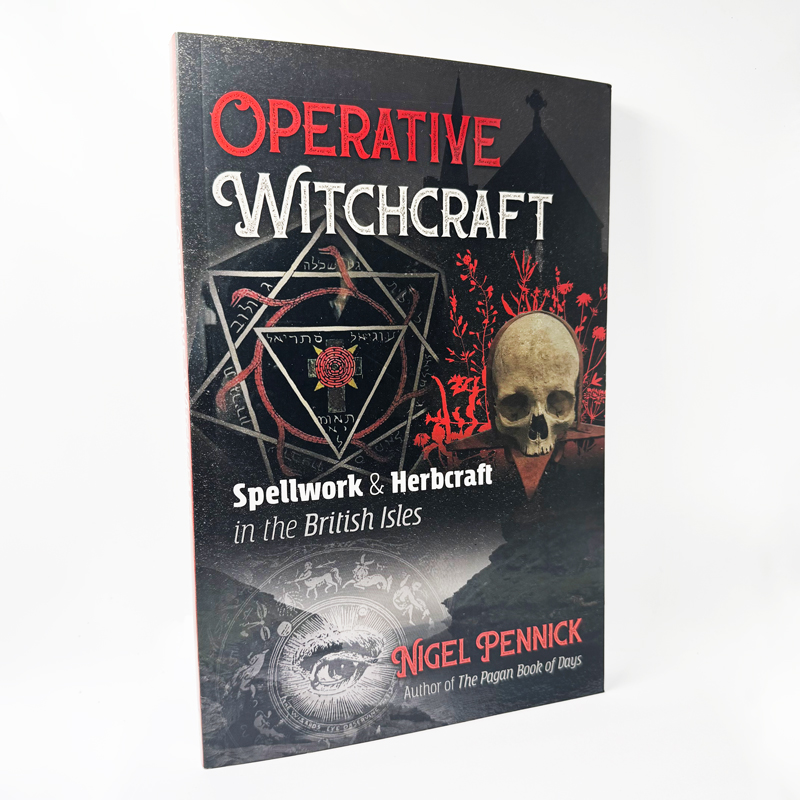
Operative Witchcraft: Spellwork and Herbcraft in the British Isles by Nigel Pennick presents a detailed examination of traditional English witchcraft as it was practised within everyday rural life.
Rather than focusing on modern interpretations, this work centres on what is often referred to as “operative” witchcraft, practical, results-based work carried out by individuals embedded within their communities. Drawing on historical records, folklore, and regional traditions, Pennick traces how witchcraft functioned across the British Isles from the Middle Ages through to its decriminalisation in the 20th century.
A key focus of the book is the role of tradespeople, including blacksmiths, herbalists, and artisans, who were believed to incorporate magickal methods into their work. These practices were not separate from daily life but intertwined with craft, healing, protection, and social influence. Within spiritual communities, such practices are understood as part of a broader folk tradition, where magick and labour were closely linked.
- Explores rural English witchcraft traditions across historical periods
- Examines familiars, fetches, and animal-related magick
- Includes spells, charms, incantations, and sigil work
- Covers herbal practices, including the use of nightshades and aromatic oils
- Details tools such as the witches’ dial, pins, nails, thorns, and protective amulets
Pennick also addresses beliefs surrounding different types of practitioners, often categorised as “white”, “black”, and “grey” witches, reflecting historical attempts to define intention and moral alignment. These distinctions are presented within their historical context rather than as fixed systems.
The book gives attention to the relationship between witchcraft and Christianity in Britain, a complex and often contradictory dynamic. While persecution and legal restrictions shaped public attitudes for centuries, there are also documented instances of clergy engaging in protective or magickal practices themselves. Laws against witchcraft remained in place in parts of the UK until the mid-20th century, influencing how these traditions were practised, concealed, or adapted.
Nigel Pennick brings academic and practical insight to the subject. As an author of over 50 works on European traditions, runes, and geomancy, and founder of the Institute of Geomantic Research, his work reflects long-term study of belief systems rooted in landscape, symbol, and cultural memory.
This book is suited to those interested in the historical foundations of British witchcraft, particularly practitioners looking to understand how modern forms have developed from earlier, land-based and craft-based traditions.