
Description
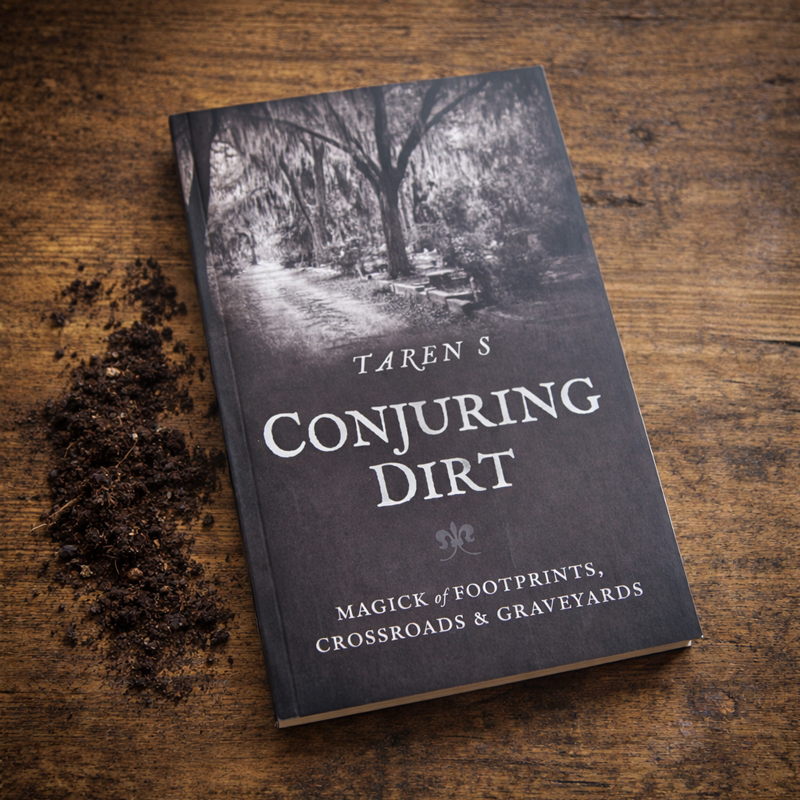
Conjuring Dirt: Magick of Footprints, Crossroads & Graveyards by Taren S. is a detailed exploration of one of the most overlooked yet symbolically powerful materials in magickal practice, dirt.
Working with earth is rooted in the understanding that the land holds memory. Across many spiritual traditions, dirt is believed to carry the imprint of place, people, and events. Whether gathered from crossroads, graveyards, or the trace of a person’s footprint, it is considered within spiritual communities to act as a physical link, connecting the practitioner to a specific energy, intention, or spirit.
This text draws heavily on Taren S’s lived experience. She first entered magickal practice at seventeen, standing in circle in rural North Carolina. In 1995, she was initiated as a High Priestess within American Witchcraft, marking a formal commitment to structured spiritual work. Her path later expanded through hands-on experience within a Haitian Voodoo Doctor’s botanica in the South Carolina Lowcountry, where she worked as a spiritual counsellor and professional tarot reader for over a decade. This environment placed her in direct contact with community-rooted spiritual practices, rather than purely theoretical systems.
She was also initiated as a Mama Bridget within American Voodoo and Hoodoo traditions, a role associated with service, spirit work, and guidance. While these traditions are complex and culturally specific, her experience within them informs her approach to dirt work, particularly in relation to graveyards, ancestral presence, and spirit communication.
- Explores dirt as a carrier of spiritual imprint and connection
- Focuses on specific locations, including crossroads, graveyards, and footprints
- Draws from real-world botanica and community-based spiritual practice
- Covers a range of workings, including protection, healing, spirit work, and baneful applications
- Addresses ethical considerations, including consent, respect for the dead, and cultural awareness
The book makes clear that working with dirt is not inherently simple, despite its accessibility. Dirt gathered from spiritually active locations is understood to carry weight, and the act of collecting and using it requires intention and awareness. Graveyard dirt, for example, is often associated with ancestral connection or spirit work, while crossroads have long been linked to decision-making, liminality, and spirit contact across multiple traditions.
Readers are guided through both the practical and spiritual considerations of working with these materials. There is a clear emphasis on respect, not only for the spirits and locations involved, but also for the cultural origins of certain practices. This is particularly important where traditions connected to African diaspora spirituality are referenced, as these systems carry lineage, structure, and responsibility.
Conjuring Dirt is suited to practitioners who are ready to engage more deeply with land-based materials and understand that even the most common substances can hold layered spiritual meaning. It offers insight, but also reminds the reader that experience, discernment, and respect remain central to any meaningful practice.


